
A dealership's content can help people understand the vehicle, the team and the buying experience. Combine model education, useful staff answers, current offers and well-produced vehicle footage. Give each piece a distinct purpose and keep factual details aligned with the inventory and promotions available when it publishes.
Use the buyer's questions as the brief
Ask the sales and service teams which questions they answer repeatedly. Useful content can explain a feature, demonstrate a practical use, introduce a team member or describe what happens during a visit. Those ideas make the page helpful before a buyer is ready to enquire.
Identify who the piece serves. A model introduction, an ownership tip and a current offer address different moments in the customer relationship. Choose the information and next action that fit that moment.
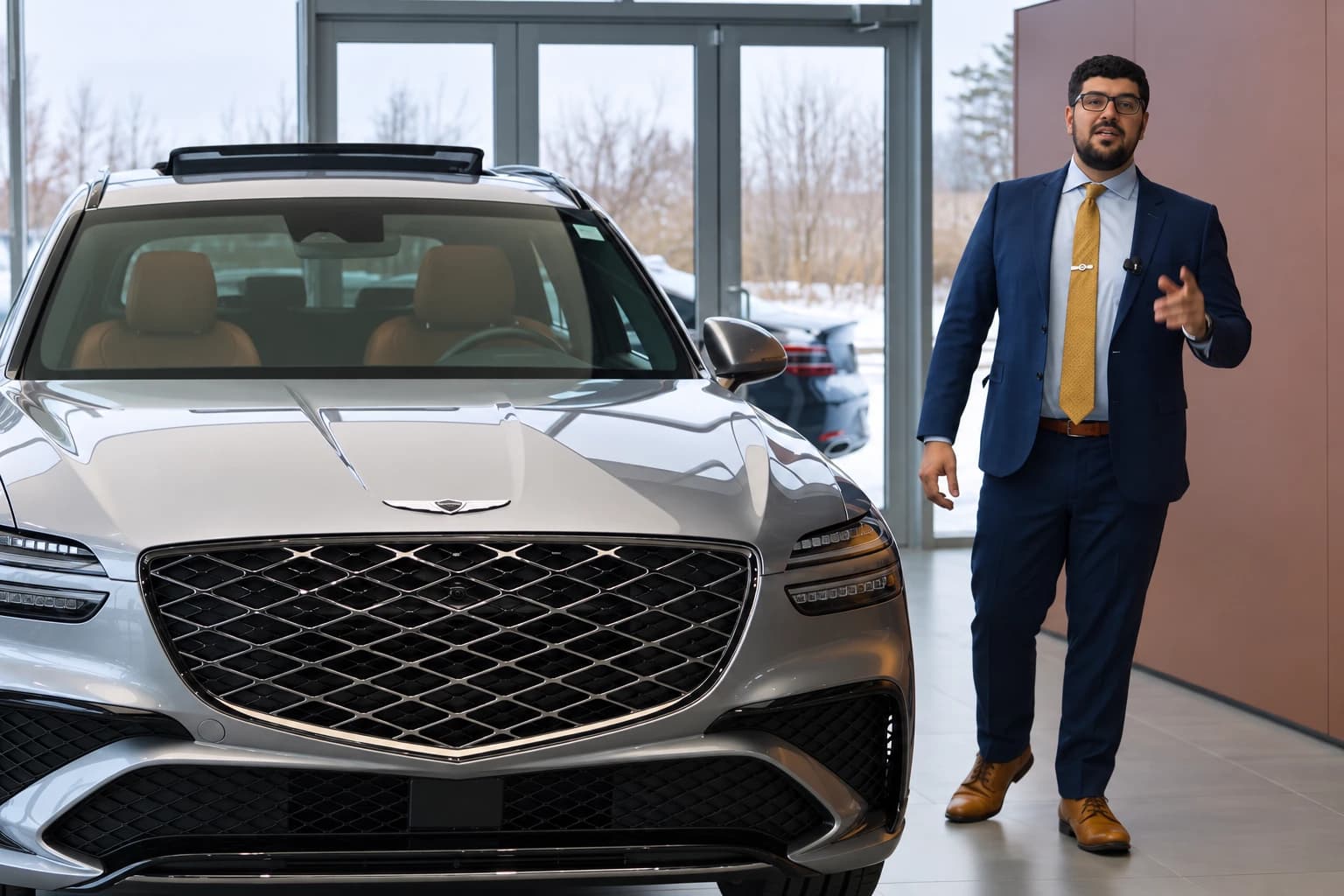
The Genesis Ottawa work included a premium vehicle video set. Myers Kanata VW's project connected promotions with a steadier content plan. Together they show how visual craft and publishing consistency can support different parts of the dealership's presence.
Give the content mix some range
A walkaround is one useful format. Add formats that resolve different questions and give the production team clear jobs to film.
| Content theme | A useful idea | What to confirm |
|---|---|---|
| Model education | Demonstrate one feature in a real use case | Model, trim and specification accuracy |
| Staff expertise | Answer a recurring sales or service question | The approved explanation and person responsible |
| Ownership | Explain a practical check or maintenance topic | Guidance from the qualified service team |
| Current offer | Explain the proposition and next step | Availability, dates, terms and required disclosures |
| Vehicle story | Show the model through purposeful cinematic footage | The actual vehicle, location and campaign role |
| Buying experience | Introduce the showroom and what a visitor can expect | The real process and team availability |
Use vehicle footage with intention
Choose coverage that shows what the edit needs to communicate. A road film can establish the character of a model; a detail sequence can draw attention to an interior feature; a demonstration can make a specification understandable.
The Genesis campaign assets include road and showroom footage. The useful production lesson is to decide the role of the piece before choosing shots and edit pacing. Premium presentation comes from coherent coverage and sound, as well as image quality.
Keep captions and spoken claims grounded in the actual model and trim. Beautiful footage should help the buyer understand what they are seeing.
Let the team add useful context
The people who work with customers can explain the questions behind a purchase. Prepare them with a specific point rather than a broad instruction to make an entertaining video. A concise answer can be filmed in a way that feels natural and clear.
For technical or maintenance topics, involve the person qualified to approve the advice. Keep safety-critical recommendations within the manufacturer's or service team's guidance. For customer stories, confirm permission and how the footage will be used.
Personality-led pieces can make the dealership recognizable. Give them enough structure to stay relevant to the business and enough room for the contributor's own delivery.
Keep offers current and actionable
Promotional content needs a review close to publication. Check the vehicle, inventory, availability, dates and wording with the dealership. Confirm the destination a viewer reaches after the post, whether that is a relevant page, enquiry or booking action.
Separate evergreen education from time-sensitive promotions in the calendar. That makes it easier to replace an expired offer without discarding useful material that can still answer customer questions.
A steady publishing plan should leave room for changes in inventory and business priorities. The Myers project is a useful example of connecting creative production to recurring promotion instead of treating each video as an isolated task.
Review audience response and buyer intent
Views and local reach help describe distribution. Review the questions people ask, visits to relevant pages and qualified enquiries to understand what happens after someone sees the content. Make the limits of attribution clear.
Use those observations to choose the next brief. If a feature creates questions, explain it more clearly. If an offer attracts the wrong audience, revisit the proposition and destination. If customers mention a useful video during a visit, record that feedback without turning it into an unsupported numerical claim.
The goal is a content mix that helps the dealership stay visible and helps buyers make informed next steps. A repeatable plan gives the team a way to improve that mix over time.
Common questions
Should dealerships stop making walkaround videos?
Walkarounds remain useful when they explain the vehicle clearly. Complement them with customer questions, model education, team expertise and current offers to give the content mix more range.
How often should a dealership film new content?
Build the schedule around inventory changes, offers, contributors and production capacity. Keep evergreen education in the plan and allow fresh footage for time-sensitive information.
What should be checked before an offer video publishes?
Confirm the actual vehicle and trim, current availability, offer dates, terms, disclosures and enquiry destination with the dealership's responsible reviewer.
Put it into practice
Sources and project examples
- Genesis Ottawa projectActual premium automotive campaign footage and production approach.
- Myers Kanata VW projectRecurring promotions and consistent publishing work.
- WebRise social media servicesStrategy, production and publishing scope.
Practical notes from WebRise's strategy, website and production work.